
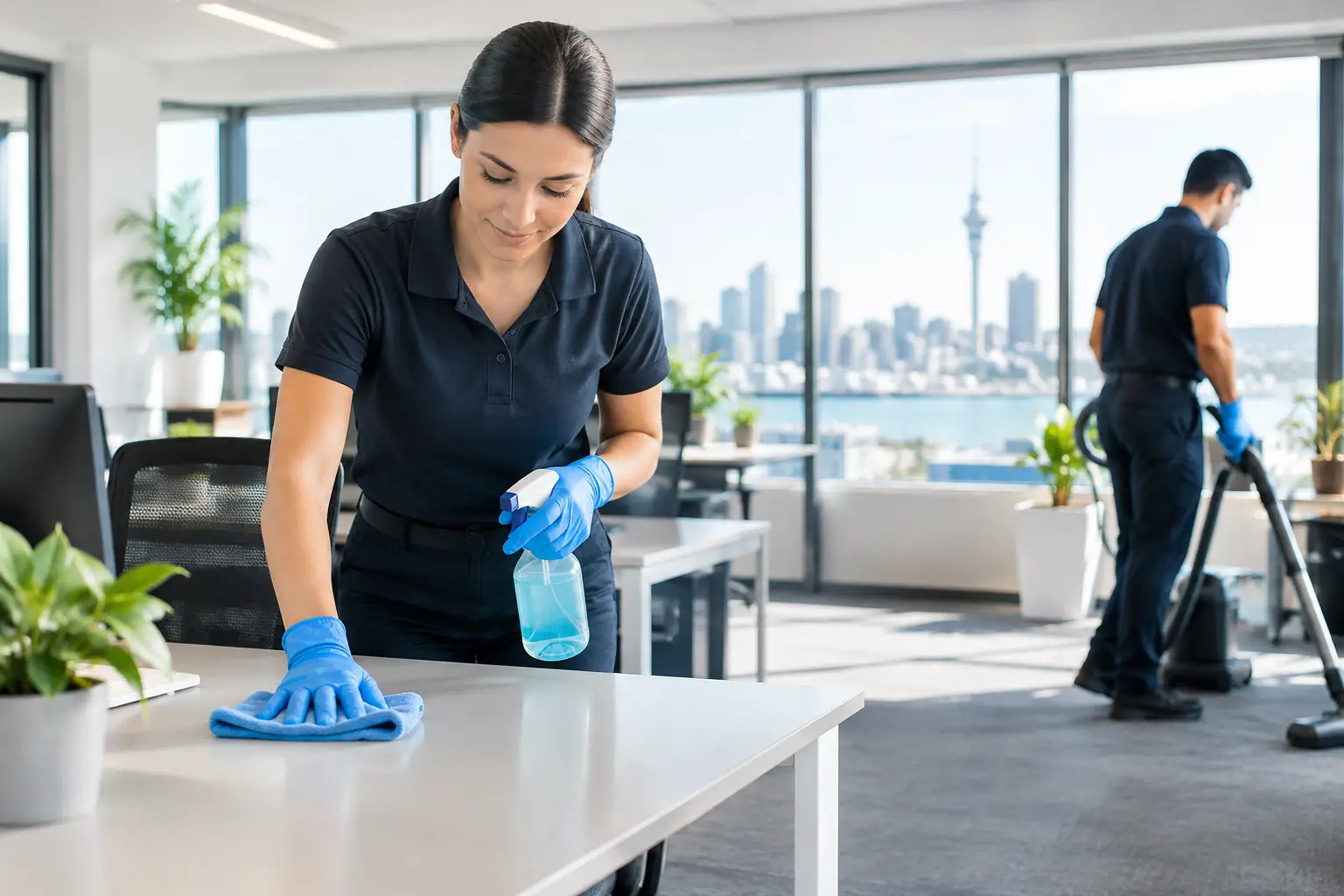
A clean reception desk, streak-free glass and fresh washrooms shape how people feel about your business before a meeting even begins. So, what does commercial cleaning include? Usually, it covers the routine cleaning tasks that keep a workplace hygienic, safe and presentable – but the exact scope should match your premises, foot traffic and operating hours.
For Auckland businesses, commercial cleaning can range from a straightforward weekly office clean to a detailed programme for shared facilities, retail spaces, medical environments or post-construction sites. The best service is not simply a standard checklist. It is a reliable plan that takes care of the areas your staff, customers and visitors use every day.
What commercial cleaning usually includes
Routine commercial cleaning focuses on the surfaces, rooms and touchpoints that quickly affect cleanliness and appearance. In an office, this generally includes vacuuming carpets and mopping hard floors, emptying rubbish and recycling bins, dusting accessible surfaces, wiping desks where agreed, and cleaning kitchens, toilets and entry areas.
Washroom cleaning is a core part of most commercial services. Cleaners disinfect toilets, basins, taps, door handles and other high-touch points, then restock agreed consumables such as toilet paper, hand towels and soap when these are supplied as part of the arrangement. Floors are cleaned and mirrors are polished so the space feels properly cared for rather than quickly tidied.
In kitchens and staff break areas, the usual work includes wiping benches, sinks, splashbacks, tables and the outside of appliances. Crumbs, spills and food residue can build up quickly in shared spaces, so a regular clean helps reduce odours and keeps the area pleasant for everyone using it.
Reception areas, meeting rooms and common corridors also receive attention. This may involve dusting furniture, removing marks from glass doors, wiping light switches and handles, arranging chairs and clearing obvious rubbish. These details matter because they keep the workplace looking organised between client visits.
Floors, glass and high-touch areas need different care
A good commercial clean is not one method applied everywhere. Carpeted offices need regular vacuuming, with periodic carpet cleaning to deal with embedded soil, spills and stains. Hard floors may need sweeping and mopping each visit, while higher-traffic entries can require more frequent attention to prevent dirt being walked through the building.
Internal glass, mirrors and glass partitions are commonly included where needed. Exterior window cleaning is usually scheduled separately, particularly for multi-storey buildings or sites where specialist access equipment is required. It is worth confirming this early, as “window cleaning” can mean very different things depending on the property.
High-touch surfaces deserve special attention in busy workplaces. Door handles, lift buttons, shared equipment, kitchen taps, railings, switches and reception counters can be cleaned and disinfected as part of a hygiene-focused programme. This is particularly useful in offices with hot-desking, customer-facing counters, schools, clinics and workplaces with many shared facilities.
The scope changes with your type of premises
There is no single answer to what commercial cleaning includes because every workplace has different risks, hours and presentation standards. A small office may need a weekly evening clean, while a retail store may need early-morning floor care and regular glass cleaning. A warehouse often needs a plan that handles dust, amenities and office spaces without disrupting operations.
Medical and childcare settings may require more detailed disinfection procedures and products appropriate for sensitive environments. Hospitality venues can need close attention to food-service areas, washrooms and floors, often at times that fit around trading hours. Property managers may also need vacant commercial spaces cleaned between tenants, including more intensive work on carpets, windows and built-up grime.
The key is to agree on the rooms, tasks, frequency and exclusions before work starts. A transparent scope avoids the common frustration of assuming a task is included when it is actually an occasional extra.
Tasks often quoted separately
Some services sit outside a standard recurring commercial clean because they require extra time, specialised equipment or a different level of access. They are still useful for keeping a property in top condition, but they are usually booked as periodic or one-off work.
These may include:
- Deep carpet cleaning and stain treatment
- Exterior and high-access window cleaning
- House or building washing, roof and gutter cleaning
- Pressure cleaning for driveways, paths and car parks
- Post-construction cleaning and builders’ dust removal
- Rubbish removal, pest control and grounds maintenance
For example, vacuuming an office carpet is part of normal maintenance, while hot-water extraction to lift tracked-in dirt and refresh fibres is a specialist carpet clean. Similarly, wiping interior glass partitions during a regular visit is different from cleaning exterior windows several levels above ground.
Knowing these distinctions helps you compare quotes fairly. The lowest price is not always the best value if it leaves out the work that keeps your premises safe, professional and genuinely clean.
How often should commercial cleaning be booked?
Cleaning frequency depends on how quickly your workplace gets used. A compact office with a small team may be fine with a weekly clean, especially if staff handle light daily tidying. A busy office, retail site or customer-facing business may benefit from two or more visits each week. High-traffic washrooms and shared kitchens are often the first spaces to show when the schedule is too light.
Consider the number of people on site, whether customers visit, the type of flooring, food and drink facilities, and the amount of rubbish produced. Seasonal Auckland weather can also make entrances dirtier, particularly during wet periods when moisture and debris are carried inside.
A practical approach is to start with a schedule that meets current needs, then review it after a few weeks. If bins overflow, floors lose their finish too quickly or amenities are not holding up between visits, increasing frequency is often more effective than expecting one long clean to solve everything.
What to confirm before accepting a quote
A clear commercial cleaning quote should tell you what will be cleaned, how often visits occur and whether cleaning happens during or outside business hours. It should also explain whether consumables, equipment and environmentally responsible cleaning products are included.
Ask how keys, alarms and site access are managed, especially for after-hours work. You should know who is attending your premises, how issues are reported and what happens if a clean does not meet the agreed standard. Background-checked staff, responsive support and a satisfaction guarantee provide useful reassurance when cleaners will be working in your business after hours.
It is also sensible to discuss security-sensitive areas, confidential paperwork and desks with personal equipment. Most businesses prefer cleaners to work around papers rather than move them. Clear instructions protect your team and help cleaners do their job efficiently.
Eco-friendly cleaning is part of a healthier workplace
Commercial cleaning products affect indoor air, shared surfaces and the people who work around them. Eco-friendly and biodegradable products can be a sensible choice for businesses that want a cleaner workplace without unnecessarily harsh chemicals. They are especially relevant in enclosed offices, childcare settings and spaces where staff or visitors may be sensitive to strong fragrances.
Eco-friendly does not mean compromising on visible results or hygiene. The right products and processes should clean effectively while being selected for the surface, the task and the environment. A professional team will also use appropriate cloths and equipment to avoid transferring dirt from washrooms into kitchens or work areas.
Build a plan that keeps your premises ready
Commercial cleaning works best when it supports the way your business actually operates. That might mean quiet evening office cleaning, a morning retail refresh, regular washroom checks or a one-off deep clean before handing over a tenancy. EcoSparks can combine routine commercial cleaning with carpets, windows, rubbish removal and exterior property care, so you do not have to coordinate multiple providers.
A well-maintained workplace gives your staff a better space to work and gives every visitor a reason to feel confident at the door. Set the scope clearly, choose a frequency that suits your traffic, and let a dependable cleaning plan keep the sparkle going.