
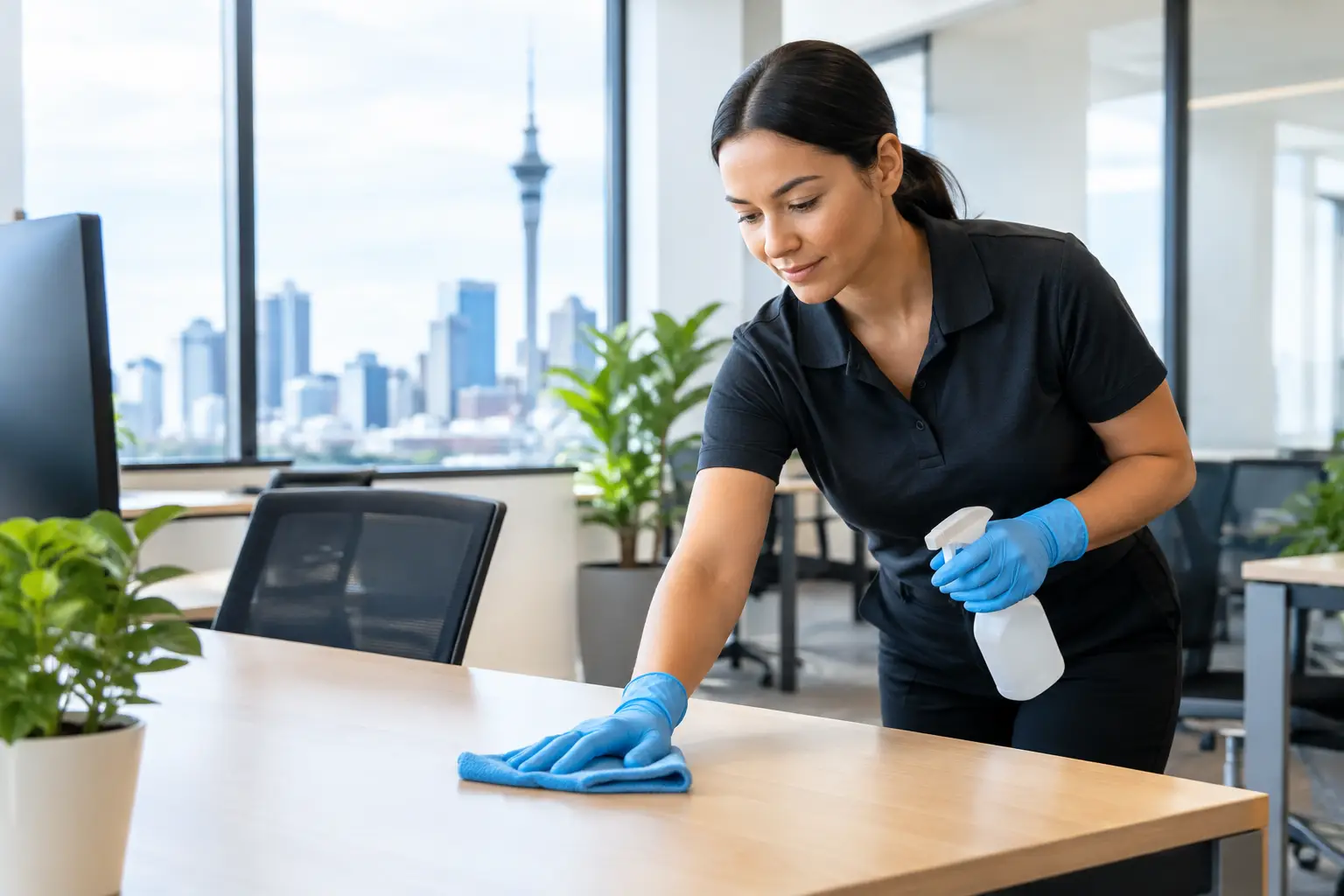
A streaky glass door, a bin that is overdue for emptying, or a washroom without soap can change how people feel about your business before a meeting has even begun. Good workplace hygiene is not just about looking tidy. It supports staff wellbeing, gives visitors confidence and keeps the practical parts of the day running without avoidable distractions.
For Auckland businesses, the standard needs to hold up through wet winter days, busy lunch breaks, client visits and the daily movement of people through shared areas. The goal is simple: clean, stocked and well-presented premises that let your team focus on their work.
What Good Workplace Hygiene Looks Like
A hygienic workplace is a consistent one. Floors are free of tracked-in dirt and slips, desks and touchpoints are cleaned properly, washrooms are fresh and supplied, and rubbish is removed before it becomes a problem. These details are easy to notice when they are missing, but they should not require your staff to think about them all day.
The right routine depends on your premises. A small office with a handful of desk-based staff may need a weekly professional clean supported by simple daily habits. A busy showroom, medical-adjacent site, shared workspace, gym or customer-facing reception area may need attention several times a week, or every day.
It also depends on how people use the space. An office where staff bring lunch and share kitchen facilities needs more kitchen care than one where most people work off-site. A warehouse with dusty foot traffic will have different floor and entry requirements from a corporate suite. Effective cleaning is tailored to the real use of the property, not based on a one-size-fits-all checklist.
Focus on the areas people share
High-touch and high-traffic surfaces deserve the most regular attention. Door handles, lift buttons, reception counters, light switches, tapware, fridge handles and shared equipment can be touched by dozens of people in a day. Cleaning these surfaces regularly helps reduce the spread of everyday germs while keeping marks, fingerprints and grime from building up.
Washrooms and kitchens are equally visible signals of care. A clean toilet, dry floor, stocked soap dispenser and fresh hand towels make the workplace more comfortable for everyone. In kitchens, benches, sinks, microwaves and fridge handles need a clear routine, especially where several teams share the same facilities.
Build a Workplace Hygiene Routine That Works
The best routine is realistic enough to be followed. Asking staff to manage every cleaning task on top of their actual roles often creates an uneven result. Someone may wipe down a meeting table, while bins, washrooms and corners of the office quietly fall behind.
Set clear ownership for everyday actions, then arrange reliable professional cleaning for the work that needs consistency, equipment and time. Your team can handle immediate spills, clear food from desks and report low supplies. A cleaning provider can take care of the deeper, repeatable work that keeps the whole premises at a professional standard.
A practical schedule often includes:
- daily checks of washrooms, kitchen benches, rubbish bins and entry areas;
- regular wiping of shared touchpoints and meeting room surfaces;
- weekly vacuuming, mopping, dusting and detailed kitchen and washroom cleaning;
- periodic carpet cleaning, interior window cleaning and deep cleaning of overlooked areas.
The frequency should be reviewed after the first few weeks. If bins are filling too quickly, the kitchen is busy every afternoon, or rainy weather is leaving the entryway messy, adjust the plan. A cleaning schedule should respond to your business, rather than forcing your business to work around it.
Keep supplies visible and easy to use
Small problems become bigger when staff cannot deal with them quickly. Place paper towels, hand soap, surface cleaner and rubbish bags where they are needed, rather than locking them away in a distant cupboard. Keep a simple process for reporting a spill, a blocked soap dispenser or an overflowing bin.
That said, more products do not automatically mean better hygiene. Too many unlabelled bottles or harsh chemicals can create confusion and safety risks. Use clearly labelled products suited to the surface, and make sure staff know when to clean a spill themselves and when to call for support.
Hygiene Is Also About Presentation
Clients may not see your cleaning schedule, but they see its results. They notice a clean reception desk, clear windows, fresh-smelling washrooms and floors that look cared for. Those details reinforce that your business is organised, professional and considerate of the people who enter it.
Presentation matters just as much for staff. A clean, orderly environment can make it easier to welcome new starters, host meetings and take pride in the workplace. It is not about creating a showroom that nobody can use. It is about maintaining a functional space that feels ready for work.
This is where exterior care can support indoor cleaning. Muddy entrance mats, grimy glass, overflowing outdoor bins and neglected paths can carry dirt inside and lower the overall impression of the premises. Depending on your site, occasional window cleaning, pressure washing, lawn care or rubbish removal may be part of keeping the property hygienic and presentable.
Choose Products With People and Surfaces in Mind
A strong clean should not leave behind overpowering fumes or damage the surfaces you are trying to protect. Eco-friendly and biodegradable products can be a sensible choice for offices and commercial premises, particularly where staff, customers, children or pets may be present.
The trade-off is that products still need to be appropriate for the task. A gentle all-purpose cleaner may be right for a desk or benchtop, while washrooms, floors or heavily soiled areas may require a more specialised approach. Good cleaning is not about using the strongest possible chemical. It is about using the right method, product and contact time for the surface.
Carpet and upholstery care also needs attention. Spills, damp patches and built-up soil can affect appearance and odour, while aggressive treatment may leave marks or damage fibres. Prompt spot treatment and scheduled professional carpet cleaning help protect your investment and keep shared spaces looking fresh.
When to Bring in Professional Help
There is a point where ad hoc cleaning stops being cost-effective. If managers are spending time chasing cleaning tasks, staff are unhappy with washrooms, or customer-facing areas never quite look right, a regular commercial cleaning service can take pressure off the team.
Professional support is particularly useful after construction work, office moves, seasonal weather events, staff functions or periods of high occupancy. These situations create cleaning needs beyond a standard weekly visit, from dust removal and rubbish clearance to detailed floor, window and carpet care.
For businesses that want one reliable point of contact, EcoSparks can coordinate recurring office cleaning alongside one-off property care, helping Auckland workplaces stay clean inside and well presented outside. The right provider should offer clear pricing, dependable communication, trained staff and a schedule that fits your operating hours.
Make Cleanliness Easy to Maintain
Workplace hygiene works best when it is visible in everyday behaviour, not framed as a punishment or a special project. Encourage staff to leave shared spaces ready for the next person, clear dishes after use and report issues early. Keep the message practical: everyone contributes, but nobody should be left carrying the whole burden.
Review the space through a visitor’s eyes from time to time. Walk in through the main entrance, use the washroom, look at the meeting room table and check the kitchen at the end of the day. That quick walk-through often shows exactly where your routine needs more attention.
A workplace that feels clean, stocked and cared for sends a quiet but powerful message to every person who walks through the door: this is a business that pays attention.