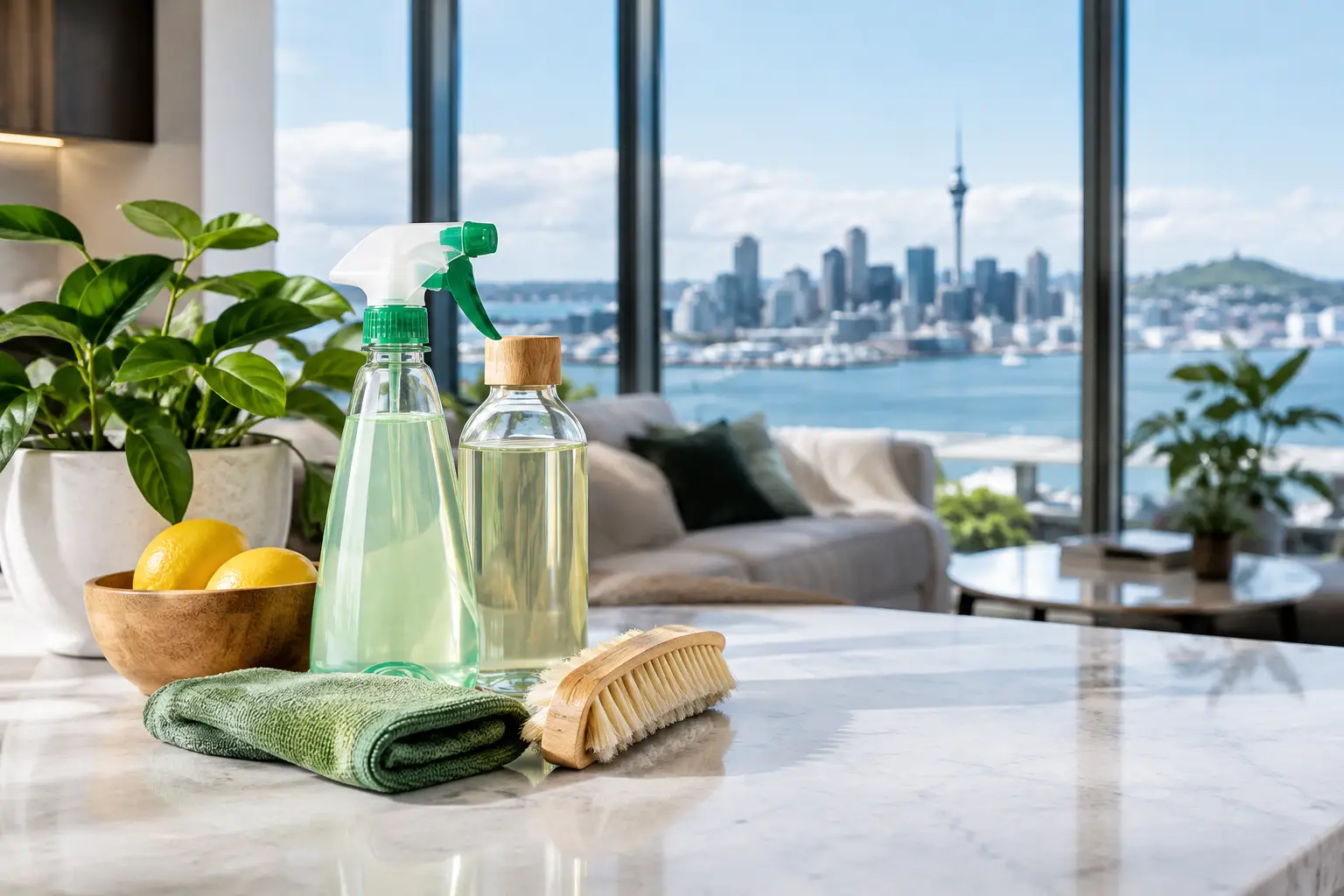
A sparkling kitchen, clear windows and fresh carpets should not leave your home or workplace smelling of harsh chemicals. Sustainable cleaning is about getting the visible result you expect while making smarter choices about products, water, waste and the health of the people using the space.
For Auckland homes, rentals, offices and shared commercial properties, the practical benefits are clear: fewer strong residues on everyday surfaces, less unnecessary packaging, and a cleaning routine that supports a healthier, well-presented property. It is not about accepting a lower standard. Done properly, it is simply professional cleaning with more care behind every step.
What sustainable cleaning actually means
The term can be used loosely, so it helps to look beyond a green label. A sustainable cleaning approach considers the full job: whether the products are biodegradable and used correctly, how much water is needed, whether reusable equipment can replace disposable materials, and how rubbish and green waste are handled afterwards.
It also means matching the cleaning method to the surface and the problem. A lightly marked glass door does not need the same treatment as a greasy commercial kitchen floor. Using the mildest effective product protects finishes, avoids wasting supplies and helps reduce unnecessary chemical runoff.
For most households and businesses, this approach is especially valuable in high-touch areas. Kitchen benches, bathroom surfaces, desks, door handles and shared facilities need to be hygienically clean without leaving an overpowering scent behind. Fragrance is not proof of cleanliness. Good processes, suitable products and careful attention to detail are what make a property feel genuinely fresh.
Eco-friendly does not mean every product is the same
Biodegradable products can be a better choice, but they still need to be used at the correct dilution and for the right purpose. More product is not better. Overuse can leave residue, waste money and create avoidable impacts when wash water enters drains.
There are also times when a stronger, targeted treatment is necessary. End-of-tenancy cleaning, mould-prone bathrooms, post-construction dust, heavily stained carpets and food-service areas can call for specialist products or equipment. The sustainable choice is not always the gentlest-looking bottle. It is the approach that solves the issue safely, effectively and without using more resources than the job requires.
Sustainable cleaning at home
Busy homes collect mess quickly. Auckland weather brings wet shoes, pollen, mud and moisture inside, while family life adds food spills, bathroom grime, pet hair and fingerprints everywhere. A sustainable routine focuses on preventing build-up so every clean does not become a major reset.
Start with the spaces that affect daily comfort: kitchens, bathrooms, floors and frequently touched surfaces. Regular cleaning prevents grease and soap scum from becoming harder to remove later. That often reduces the need for aggressive products or repeated scrubbing.
Reusable microfibre cloths are useful because they lift dust and grime efficiently when washed and maintained properly. Separate cloths by task – for example, one set for bathrooms and another for kitchen surfaces – to avoid transferring bacteria between areas. Vacuuming or sweeping before mopping also means less water and product are needed to finish the floor.
For homes with children, pets or people sensitive to strong scents, ask what products are being used and whether they are suited to the area. Ventilation still matters, even with gentler products. Open windows where practical and allow damp areas to dry well, particularly bathrooms and laundry spaces where moisture can lead to mould.
Protect the surfaces you have paid for
Sustainability includes making materials last. Harsh abrasives can dull taps, scratch glass, damage painted finishes and wear down sealed timber or stone surfaces. Replacing damaged fixtures or refinishing surfaces creates far more waste and expense than choosing the right cleaner in the first place.
This is particularly relevant for landlords and tenants preparing for a move. An end-of-tenancy clean should restore the property without causing fresh damage to cooktops, flooring, shower glass or cabinetry. Clear communication about stains, wear and pre-existing damage helps everyone avoid surprises.
A practical approach for offices and commercial spaces
A clean workplace affects more than appearance. It supports hygiene, staff comfort, client confidence and the day-to-day life of the building. Sustainable commercial cleaning keeps those standards high while helping facilities teams reduce avoidable consumption.
The best place to begin is with a regular schedule. Weekly or fortnightly cleaning can stop dust, fingerprints, food residue and bathroom grime from becoming ingrained. That usually makes each service more efficient than leaving the space until it needs a heavy clean.
Consider the high-use areas first: entry points, shared kitchens, bathrooms, meeting rooms and workstations. These zones benefit from consistent attention, while lower-traffic areas may not need the same intensive treatment every visit. Tailoring the scope prevents time, water and supplies from being spent where they are not needed.
Waste handling deserves the same care. Clearly marked recycling and rubbish bins make it easier for cleaners and staff to keep materials separated. Cardboard from deliveries, drink containers and office paper are common opportunities, but the system only works when bins are simple to use and collected regularly.
A professional team should also use equipment that suits the site. Effective vacuums, washable mop heads and refillable product systems can reduce disposable waste without compromising hygiene. For property managers, consistency is just as valuable as the environmental benefit: a reliable schedule and clear standards make inspections, tenant expectations and workplace presentation easier to manage.
Outdoor cleaning needs a different mindset
Exterior care is where water use and runoff become especially important. House washing, driveway cleaning, roof cleaning, gutter clearing and vehicle washing all need methods that suit Auckland conditions and protect surrounding gardens, stormwater systems and exterior materials.
The goal is not to use the maximum pressure possible. It is to remove grime, moss, mould and debris without damaging paintwork, roofing, pavers or garden edges. Pressure and product choice should change depending on the surface. Timber decking, painted cladding and delicate roof materials need more care than a hard concrete driveway.
Gutter cleaning offers a good example of preventive maintenance. Removing leaves and debris can help water flow properly and reduce the chance of overflow, dampness and property damage. Green waste should then be collected and disposed of responsibly rather than left to wash back into drains or spread across the section.
For gardens and grounds, regular lawn mowing, hedge trimming and green-waste removal can keep outdoor areas tidy before they become an overwhelming job. A well-maintained exterior also helps a property look cared for between inspections, viewings or client visits.
Questions to ask before booking a cleaner
Choosing a sustainable service should still be easy. You do not need a chemistry lesson to make a good decision, but a few practical questions can reveal whether a provider has a thoughtful process.
Ask what types of products they use, whether they can accommodate sensitivities, and how they manage reusable equipment between jobs. Check whether pricing and the service scope are clear, particularly for move-out, carpet, construction or exterior work where the condition of the property can vary. It is also sensible to ask how rubbish, green waste or collected debris will be handled.
Trust matters too. Inviting someone into a home, office or managed property requires confidence in their professionalism. Background-checked staff, responsive customer support and a satisfaction guarantee are not extras – they are part of a service that should make your life easier.
EcoSparks brings eco-friendly and biodegradable product choices together with practical cleaning, outdoor care and property maintenance across Auckland. That means a regular home clean, a one-off exterior job or ongoing workplace care can be organised with a focus on clear results and responsible methods.
Small choices create a cleaner routine
Sustainable cleaning works best when it becomes part of how a property is cared for, rather than a once-a-year response to a major mess. Keep moisture under control, deal with spills early, use the correct product sparingly and schedule professional help before grime turns into damage.
The result is a home or workplace that looks polished, feels healthier and is easier to maintain. Choose cleaning that makes your property sparkle while respecting the people, surfaces and surroundings that make it worth looking after.