

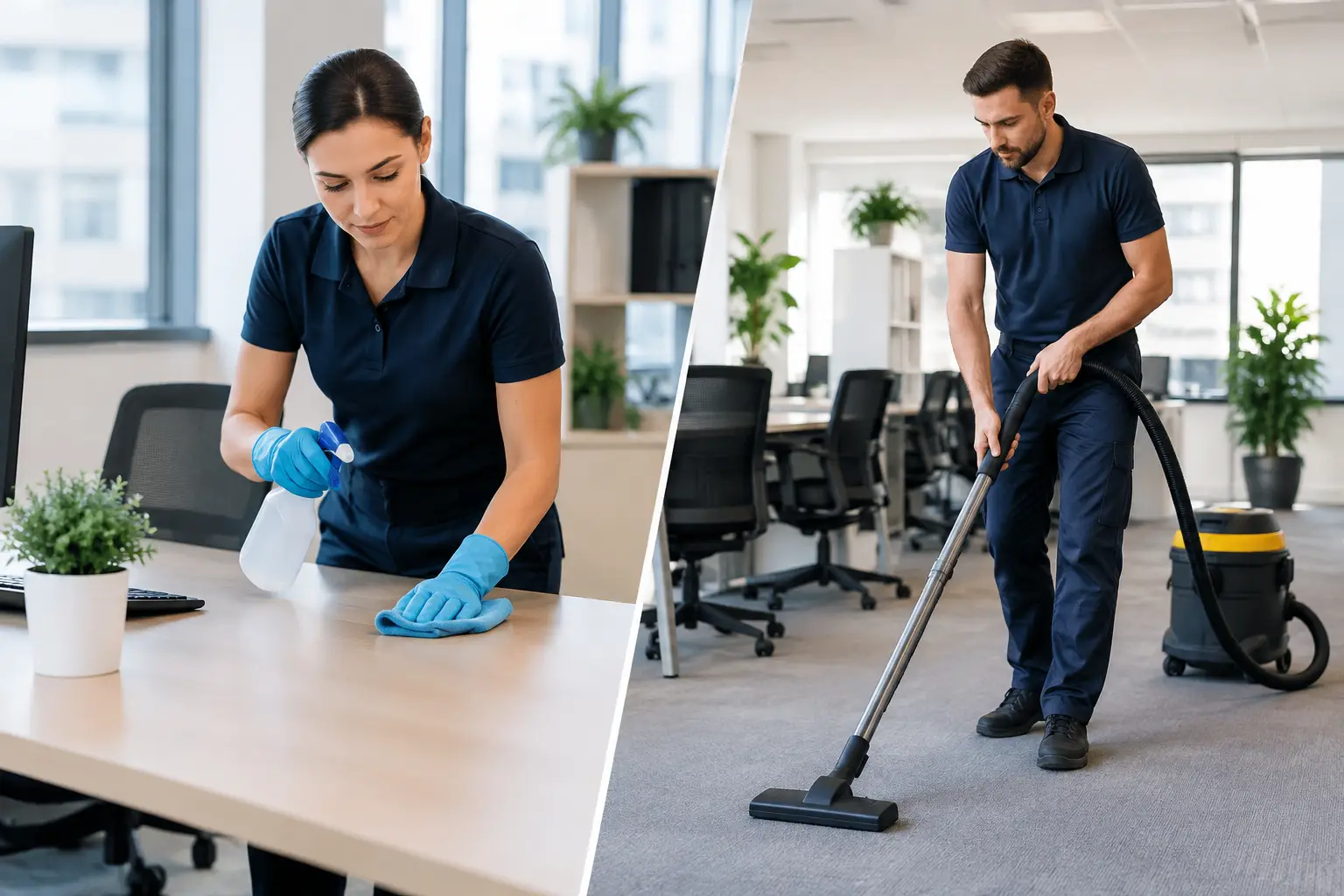
A clean office is most noticeable when it is missing. Overflowing kitchen bins, marked glass doors, dusty desks and neglected bathrooms can quickly change how staff and visitors feel about your business. When comparing weekly versus fortnightly office cleaning, the best choice comes down to how your workplace is used, not simply what fits the lowest line item in the budget.
For many Auckland businesses, a fortnightly service keeps a low-traffic workspace presentable. For busier offices, weekly cleaning is what prevents small messes from becoming a recurring distraction. The right schedule should protect hygiene, support your team and keep your premises ready for clients without paying for work you do not need.
Weekly versus fortnightly office cleaning: the practical difference
Weekly office cleaning means a professional cleaner attends once every seven days. This gives rubbish, bathrooms, floors, shared kitchens and high-touch surfaces regular attention before grime has time to build up. It is usually the better fit for offices with regular client visits, shared workstations, staff kitchens or more than a small handful of people using the space each day.
Fortnightly office cleaning means service every two weeks. It can work well in compact, quiet offices where most staff work remotely, eat elsewhere and keep their own work areas tidy. It is also a sensible starting point for new businesses that want professional presentation while managing overheads carefully.
The difference is not just how often the vacuum comes out. Cleaning frequency affects odour, bathroom condition, kitchen hygiene, indoor dust, floor wear and the amount of time your team spends dealing with jobs that should not be theirs.
When weekly cleaning is worth it
A weekly schedule is often the most dependable choice when your office has high foot traffic or shared facilities. Every person walking through reception brings in moisture, dust and debris from car parks, footpaths and public transport. In Auckland’s wetter months, hard floors and entry areas can lose their fresh appearance quickly.
Weekly cleaning is particularly useful for offices that welcome clients, suppliers or candidates. Your reception, meeting rooms and bathrooms are part of the customer experience. A spotless glass entry, fresh-smelling bathroom and clear meeting table quietly signal that the business is organised and cares about details.
Shared kitchens are another deciding factor. Tea and coffee spills, microwave splatters and food scraps can become unpleasant sooner than expected. Emptying bins and cleaning kitchen surfaces weekly helps avoid lingering odours and reduces the chance of pests being attracted to the premises.
Choose weekly office cleaning if your workplace has several of these characteristics:
- More than 10 regular in-office staff
- A shared kitchen, lunchroom or bathroom used every day
- Frequent customer, contractor or visitor appointments
- Open-plan desks and common equipment used by multiple people
- Visible dust, rubbish or floor marks returning within a week
Weekly service does not need to mean an excessive scope every visit. A practical plan can focus on the spaces that get dirty fastest, with periodic deeper work for internal glass, detailed skirting, upholstery or carpets. This keeps the office looking sharp while directing budget where it has the most impact.
Hygiene and staff wellbeing
High-touch areas such as door handles, light switches, kitchen benches, tapware and shared desks deserve regular attention. A professional cleaning routine helps reduce the build-up of everyday germs and grime in the places everyone uses.
There is also a morale benefit. Staff are more likely to respect a workplace that is consistently clean, and they should not be expected to spend Friday afternoon scrubbing the microwave or taking out overflowing rubbish. A tidy setting supports focus and gives your team a more pleasant place to work.
When fortnightly cleaning makes sense
Fortnightly office cleaning is not a lesser standard. It is a sensible option where use is genuinely low and the workplace stays orderly between services. A small design studio with three people in the office twice a week has very different needs from a busy sales floor or medical administration office.
This frequency often suits hybrid workplaces. If the office is quiet for much of the week, bins remain light, bathrooms see limited use and there are few client-facing areas, a fortnightly professional clean may maintain the right standard. Staff can handle simple daily habits such as wiping spills, rinsing dishes and putting rubbish in bins between visits.
It can also be a good starting point if you are moving into a new premises and still learning its patterns. After a month or two, you will know whether the kitchen, bathrooms and entryways remain presentable for the full fortnight. If they do not, changing to weekly cleaning is straightforward and usually more cost-effective than waiting for a bigger corrective clean.
The trade-off to watch
The risk with fortnightly cleaning is that mess accumulates unevenly. One busy week of meetings, rainy weather or catered lunches can leave the office looking tired well before the next scheduled visit. Bathrooms and kitchens are usually the first areas where this shows.
If staff are regularly taking on cleaning tasks between professional visits, the apparent saving may not be as valuable as it seems. Lost time, inconsistent results and frustration can outweigh the difference in service frequency. Fortnightly cleaning works best when there is a clear shared expectation that everyone tidies up after themselves.
Look beyond headcount when choosing a schedule
Office size matters, but activity matters more. A large office with five people attending occasionally may need less frequent cleaning than a compact workplace with 12 people, daily meetings and a constantly used kitchen.
Start by looking at your busiest week, rather than your quietest one. Consider how often visitors arrive, whether staff eat at their desks, how many bathrooms are shared and what your floors look like after wet weather. Carpeted offices can hold dust and debris out of sight, while hard floors show scuffs and tracked-in dirt quickly.
Industry also plays a part. Professional offices, real estate agencies and customer-facing consultancies often benefit from weekly service because presentation is central to trust. Workshops, trade offices and sites close to construction activity may need extra attention around entry points and dust. A quiet back-office team with minimal visitors may be perfectly comfortable on a fortnightly plan.
Build a cleaning plan around the work that matters
A good office cleaning schedule is more useful when the scope is clear. Weekly or fortnightly, the regular service should prioritise the areas staff and visitors notice most: bathrooms, kitchens, bins, floors, entryways and shared touchpoints. Desk cleaning should be agreed around privacy, equipment and clear-desk policies.
Some jobs do not need to happen every visit. Internal windows, high dusting, detailed wall-spot cleaning, carpet cleaning and upholstery care can be booked periodically or when needed. Separating recurring essentials from occasional deep-clean tasks keeps your plan efficient and makes costs easier to understand.
Eco-friendly products are also worth considering, especially in enclosed offices where strong chemical smells can linger. Using suitable biodegradable cleaning products can support a fresh workplace without leaving staff to work around overpowering fragrances.
A simple way to make the decision
Walk through the office at the end of your busiest Friday. Check the kitchen bin, bathroom mirrors, entry floor, meeting room table and any shared equipment. Then ask whether you would feel comfortable welcoming an important client into the space on Monday morning without additional cleaning.
If the answer is no, weekly cleaning is likely the better fit. If the office remains clean, odour-free and professional after two weeks, fortnightly service may be enough. Review the arrangement after seasonal changes, staff growth or a return-to-office policy, because cleaning needs can shift quickly.
EcoSparks can help Auckland businesses set a practical recurring plan with background-checked professionals, clear pricing and eco-conscious products. The goal is not to clean more often for the sake of it. It is to keep every corner of your workplace ready for the people who rely on it.
Choose the frequency that lets your team arrive to a fresh, professional office each week – and adjust it as your workplace changes. The right routine should make your premises sparkle without adding another job to your staff’s list.