

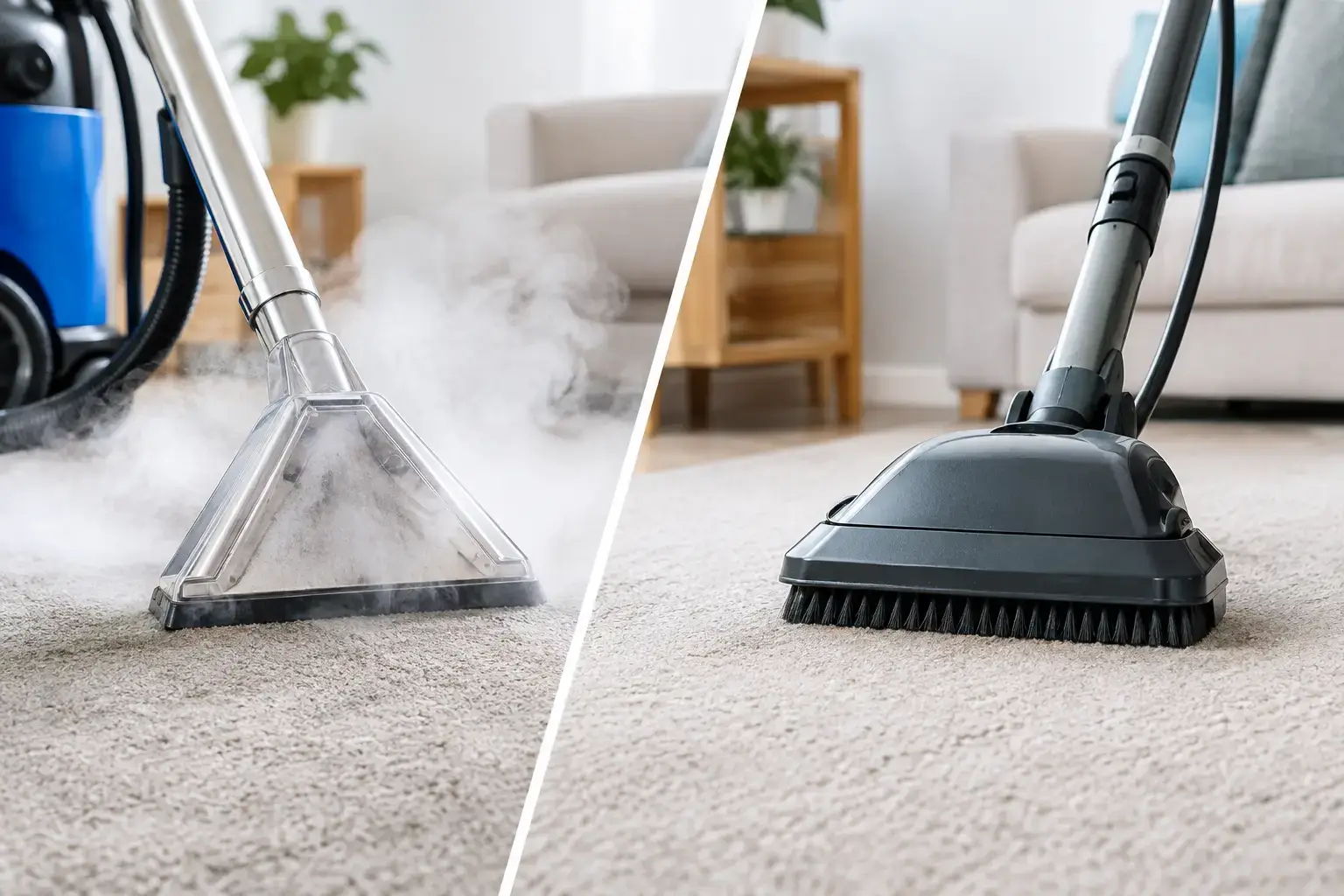
A cream carpet after a rainy Auckland week tells the story quickly: damp footprints, flattened traffic lanes and a mark that was not there on Monday. When comparing steam versus dry carpet cleaning, the best choice is not simply the strongest method. It is the method that suits your carpet, the type of soil, how quickly the room needs to be used and the condition of the property.
Both methods can deliver a fresher, healthier-looking floor. The difference is in how they lift dirt and moisture from the carpet – and what happens in the hours after the clean.
Steam Versus Dry Carpet Cleaning: The Main Difference
Steam carpet cleaning is commonly called steam cleaning, although professional machines usually use hot water extraction rather than clouds of steam. A cleaning solution is applied to the carpet, then hot water is injected into the fibres and extracted with the loosened soil. Done correctly, it is a deep-cleaning process designed to flush dirt, residues and allergens from below the surface.
Dry carpet cleaning uses very little moisture. Depending on the system, a technician may apply an absorbent cleaning compound or use low-moisture pads with a suitable cleaning solution. The product works through the carpet fibres, collecting soil before being vacuumed away or lifted by the machine.
The practical difference is clear: hot water extraction generally cleans deeper but needs more drying time. Dry cleaning offers a faster return to use, but it may not be the first choice for heavily soiled carpets or deep-set odours.
When Steam Cleaning Is the Better Option
Steam cleaning is often the stronger choice when a carpet has had a hard life. Family homes with pets, young children, regular visitors or pale carpets can build up soil well below what a vacuum can reach. The same applies to rental properties at the end of a tenancy, offices with busy walkways and homes after renovation work.
Hot water extraction is particularly useful for ground-in dirt, food spills, oily marks and lingering odours. It can also refresh carpet that looks dull even after regular vacuuming. The extraction stage matters because it removes loosened contaminants rather than leaving them sitting in the pile.
For landlords and property managers, this deeper clean can make a visible difference during inspections. It helps carpets look cared for, especially in entryways, hallways, lounge areas and bedrooms where furniture has been moved and traffic patterns are obvious.
There is a trade-off. Carpets cleaned with hot water extraction may take several hours to dry, and sometimes longer in wet Auckland weather, shaded rooms or poorly ventilated properties. Good equipment removes most of the water, but airflow still matters. Opening windows where practical, running ventilation and avoiding heavy foot traffic until the carpet is dry will protect the result.
Steam cleaning also needs the right approach for the fibre. Wool and delicate natural-fibre carpets require careful temperature, moisture and product selection. Too much water or unsuitable chemicals can cause shrinkage, colour movement or slow drying. This is where professional assessment is worth more than a one-size-fits-all method.
When Dry Carpet Cleaning Makes More Sense
Dry carpet cleaning is built for convenience. Because it uses minimal moisture, carpets can often be walked on soon after cleaning. That makes it a sensible option for offices, retail spaces, meeting rooms, busy households and properties that cannot leave rooms out of action for long.
If your business needs a clean before staff arrive, or you are preparing a home for an inspection later that day, low-moisture cleaning can be the practical answer. It is also useful for routine maintenance between deeper cleans, helping to keep carpet presentable without the longer drying window.
Dry methods can work very well on surface dirt, light stains and general dullness. They are not automatically gentler, however. The right product still needs to be selected for the fibre, and the carpet should be thoroughly vacuumed before and after treatment where the method requires it.
The limitation is depth. If a carpet is heavily soiled, has pet accidents, strong odours or stains that have worked into the backing, dry cleaning may improve the appearance without fully resolving the underlying issue. In those cases, hot water extraction is usually the more thorough option.
Drying Time Matters More Than Most People Think
Choosing a carpet-cleaning method is often a scheduling decision as much as a cleaning decision. A freshly cleaned carpet that stays damp for too long can attract new dirt from shoes, feel uncomfortable underfoot and develop a musty smell in poor conditions.
For hot water extraction, plan the clean when the room can be left open and lightly used. Move furniture where possible, keep children and pets away until dry, and place protective tabs under furniture legs if items need to be returned before the carpet has fully dried. Avoid walking from a wet footpath or garden straight onto freshly cleaned carpet.
For dry cleaning, the shorter drying time is a major advantage, but do not mistake fast access for a licence to put the room straight back under pressure. Give the treatment time to settle as advised, and avoid dragging furniture or rolling office chairs across the carpet immediately after cleaning.
Stains, Odours and High-Traffic Areas Need Different Answers
No carpet-cleaning method can promise to remove every stain. Coffee, red wine, ink, pet urine, rust, bleach damage and old mystery marks all behave differently. Some stains can be lifted; others have permanently altered the carpet dye or fibre.
Fresh spills are always easier to manage. Blot them promptly with a clean white cloth, working from the outside towards the centre. Do not scrub, as this can spread the stain and roughen the pile. Avoid soaking the area with supermarket products before a professional assessment, particularly on wool carpet. Mixing chemicals can set a stain or leave a sticky residue that attracts more dirt.
High-traffic areas are another common concern. The grey or dark path through a hallway is often not just loose dirt. It can be oily residue carried in on footwear, combined with fine dust that has worked down into the carpet. Steam cleaning is typically better placed to flush this build-up away, while dry cleaning can help maintain the result between deep cleans.
How to Choose the Right Method for Your Property
Start with the carpet’s condition, then work backwards from your timetable. A lightly soiled office carpet needing a quick refresh before a busy day may suit dry cleaning. A rental carpet with visible traffic lanes, old spills and a stale smell is more likely to benefit from hot water extraction.
Consider four practical questions before booking:
- How heavily soiled is the carpet, beyond what you can see on the surface?
- How soon does the room need to be back in use?
- What fibre is the carpet made from, and are there manufacturer care requirements?
- Are there odours, pet accidents or stains that may need targeted treatment?
A professional cleaner should assess these factors before recommending a process. Clear advice matters more than selling a single method for every home or workplace.
Keep the Clean Lasting Longer
Whichever method you choose, regular vacuuming makes the biggest difference to how long carpet stays presentable. Vacuum slowly, especially in hallways and around sofas, to remove dry soil before it becomes embedded. Mats at entrances also reduce the amount of grit and moisture carried inside.
Treat spills quickly, rotate furniture occasionally where practical and book a deeper clean before carpets look visibly dirty. Waiting until every traffic lane is dark usually means more work is needed to restore the carpet’s appearance.
For Auckland homes, rentals and workplaces, the right choice is rarely about steam being better than dry, or dry being better than steam. It is about matching the method to the mess, the material and the time you have available. A reliable team can help you make that call, then get your carpets looking fresh enough to make the whole room sparkle.