

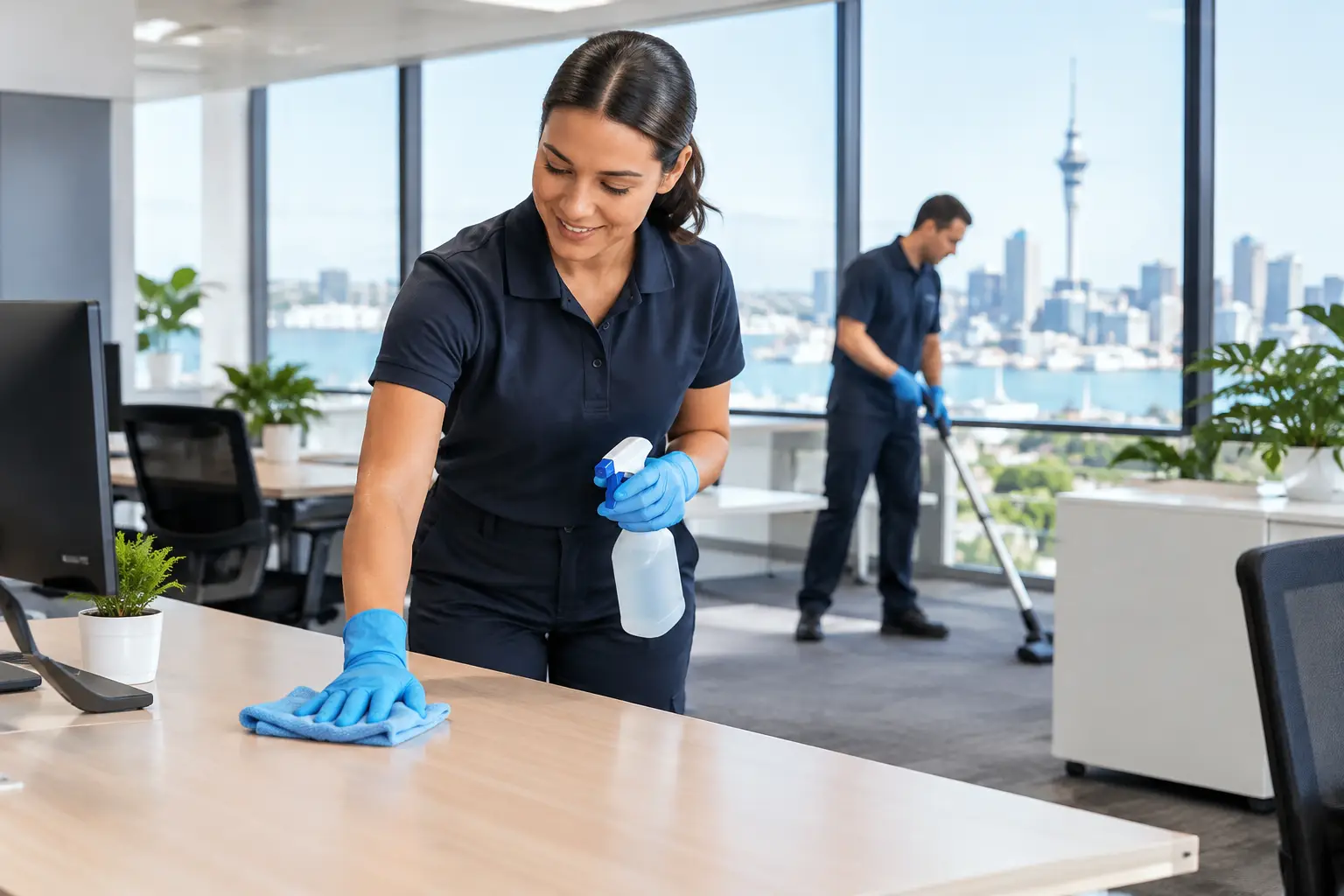
A clean office is not just about making a good first impression when a client walks through reception. It affects how your team feels at their desks, how safely shared spaces are used, and how confidently your business presents itself. This office cleaning guide helps Auckland businesses set a practical routine that keeps daily mess under control without disrupting the working day.
For most workplaces, the best result comes from combining small daily habits with a dependable professional clean. The right frequency depends on your team size, office layout, visitor traffic and the facilities on site. A quiet studio with six staff has different needs from a busy office with meeting rooms, a shared kitchen and customers arriving all day.
Start with the areas people notice first
Reception, entryways and meeting rooms create an immediate picture of your business. Dusty surfaces, fingerprints on glass and marked floors can make an otherwise well-run workplace feel neglected. These are also high-traffic areas, so dirt builds up faster than many managers expect.
Aim to clean entry floors and touchpoints every day in busy premises. Vacuuming or mopping should suit the flooring type, while glass doors, reception counters and visitor chairs need regular attention. In wet Auckland weather, a good entry mat and prompt floor cleaning also reduce the chance of slips from tracked-in water and mud.
Meeting rooms deserve a quick reset after use. Wipe tables, straighten chairs, empty rubbish bins when needed and remove old cups or catering items. This small routine makes the room ready for the next conversation and prevents food smells or clutter from carrying over into the day.
Office cleaning guide: build a schedule by frequency
Trying to deep-clean everything every day wastes time. Leaving all tasks until the end of the month creates a bigger, more expensive job. A sensible schedule separates everyday hygiene work from periodic detail cleaning.
Daily tasks that protect hygiene
Shared touchpoints should be cleaned and disinfected regularly, especially during cold and flu season. This includes door handles, light switches, kitchen benches, taps, toilet flush buttons, lift buttons and shared equipment such as printers or photocopiers.
Kitchenettes and bathrooms need particular care. Wipe benches, clean sinks, replenish soap and paper supplies, empty bins and remove visible spills daily. Toilets should be cleaned and sanitised on each service visit, with more frequent checks in high-use workplaces. A clean bathroom is one of the clearest signs that a business cares about its people.
Staff can support this routine by washing dishes promptly, labelling food in communal fridges and clearing personal desk rubbish. Professional cleaners can then focus on the work that requires proper products, equipment and consistent standards.
Weekly tasks that maintain presentation
A weekly clean is a good starting point for smaller offices with low visitor numbers. It usually covers vacuuming carpets, mopping hard floors, wiping desks and accessible surfaces, cleaning bathrooms, refreshing kitchens and emptying bins.
For offices with 15 or more staff, regular visitors or shared facilities, two or more visits each week may be a better fit. Weekly cleaning can still work if staff are mostly remote and the office is used lightly. It depends on actual foot traffic rather than headcount alone.
Do not overlook the places that collect dust quietly: skirting boards, window ledges, chair bases, behind monitors and under accessible furniture. They may not need daily attention, but including them in a rotating weekly programme keeps the whole workplace looking cared for.
Monthly and seasonal detail work
Some jobs sit outside a standard routine but make a visible difference over time. Interior glass, detailed dusting, carpet spot treatment, fridge cleaning, upholstery cleaning and high dusting can be scheduled monthly or quarterly. Window cleaning, driveway cleaning and exterior building washes may be needed seasonally, depending on exposure to traffic grime, salt air, pollen and rain.
Carpets are worth monitoring closely. A quick response to spills limits staining, while periodic professional carpet cleaning removes embedded soil that vacuuming cannot reach. It can extend the life of flooring and help the office smell fresher, particularly in busy reception areas and meeting rooms.
Give kitchens and bathrooms extra attention
Office kitchens become messy quickly because they are shared by people with different habits. Food crumbs, coffee splashes and forgotten leftovers can attract pests and create unpleasant odours. A clear system makes a difference: wipe benches after use, empty food waste often and set a regular date for clearing the fridge.
Bathrooms need the same reliable attention, with cleaning products suited to the surfaces and proper replenishment of hand soap, toilet paper and hand towels. Strong fragrances can mask a problem rather than solve it, so prioritise thorough cleaning and ventilation over simply adding air freshener.
When selecting cleaning products, choose options that are effective without leaving harsh residues or overpowering chemical smells. Eco-friendly, biodegradable products are a practical choice for offices where people spend long hours indoors. They can support a healthier-feeling environment while reducing the impact of routine cleaning on waterways and waste systems.
Keep desks clean without crossing boundaries
Desks are personal workspaces, even in open-plan offices. Cleaners can wipe accessible desk surfaces, but paperwork, devices and confidential material need a respectful approach. Encourage staff to clear their desk at the end of the day or place sensitive documents in a drawer or locked cabinet.
For hot-desking workplaces, provide disinfectant wipes or suitable surface cleaner for users to wipe down desks between shifts. Shared keyboards, mice and headsets require care too. Use products appropriate for electronics and avoid spraying liquid directly onto devices.
A clear-desk policy can improve cleaning results, but it should be realistic. The aim is not to remove personality from the office. It is to create enough clear space for cleaning to be done properly and for confidential information to remain secure.
Choose a cleaning partner that fits your workplace
Price matters, but the cheapest quote is not always the best value. Ask what is included in each visit, how often quality checks happen, whether cleaners are background-checked, and what support is available if something needs attention. Clear scope and clear communication prevent surprises.
It also helps to choose a provider that can handle occasional extra work. A routine office cleaner who can arrange carpet cleaning, window cleaning, rubbish removal or post-construction cleaning saves time when your premises need more than the usual service.
EcoSparks supports Auckland workplaces with flexible office cleaning plans, environmentally responsible products, vetted professionals and responsive support. Whether you need a regular weekly visit, a fortnightly refresh or a one-off clean before a key event, the service should be shaped around your workplace rather than forcing your team into a fixed package.
Make cleanliness easy to maintain between visits
Professional cleaning works best when the office has simple systems in place. Put bins where people genuinely need them, provide recycling options, place mats at entrances and keep supplies such as hand soap and paper towels easy to monitor. Assigning one staff member to report low supplies or maintenance issues can prevent minor problems from becoming complaints.
If your office has a busy season, an event, a fit-out or an upcoming client visit, increase the cleaning frequency temporarily. This is often more cost-effective than waiting until the space needs a major recovery clean. The goal is a workplace that looks ready every day, not only just after a cleaning visit.
A well-planned routine gives your team a cleaner place to focus, gives visitors confidence and protects the presentation of your premises. Start with the areas used most, adjust the schedule as your workplace changes, and let consistent care keep every corner looking its best.