

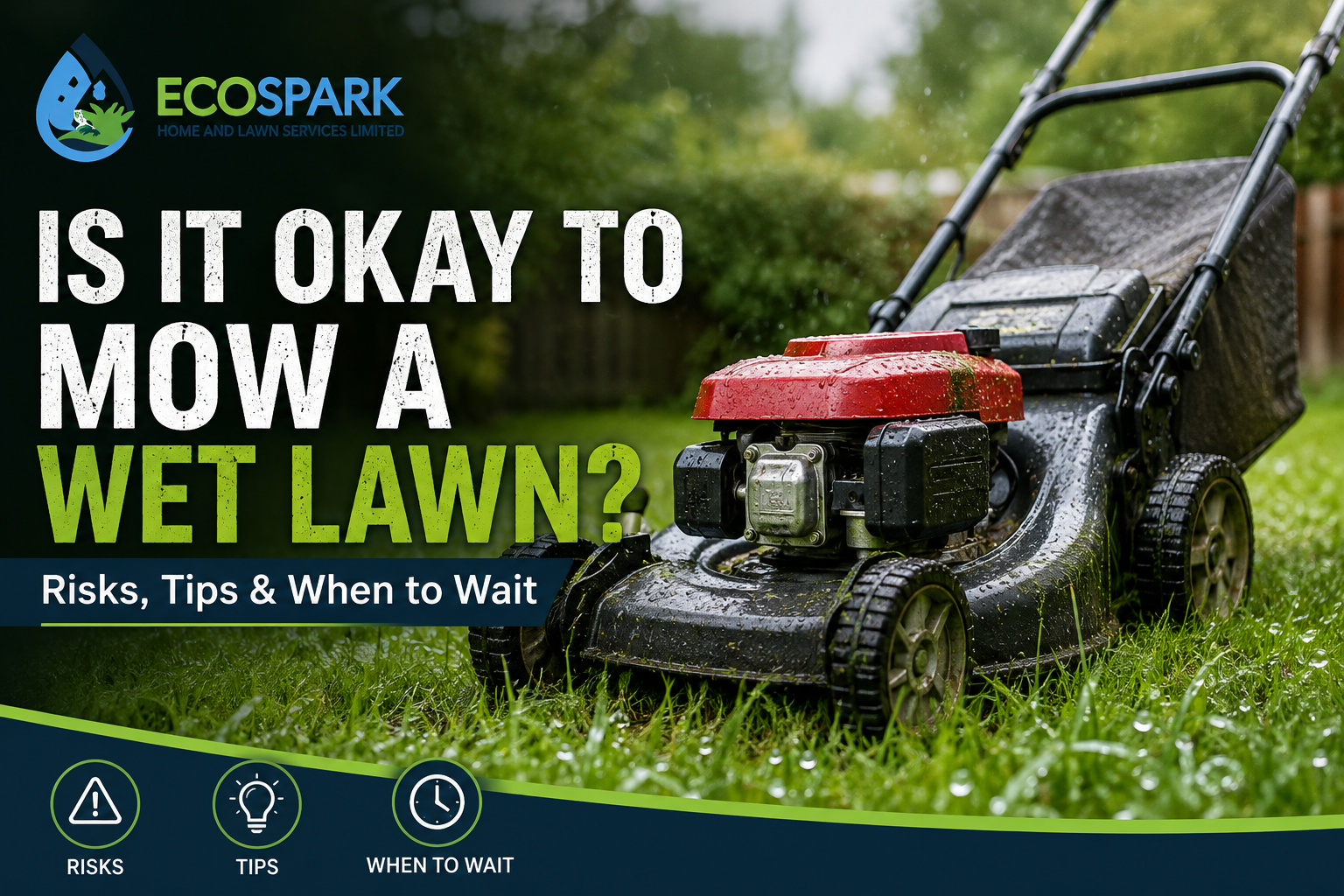
Cleanly mowed grass can add an immaculately manicured appeal to your backyard, but what do you do when the grass is damp due to rain or dew? While you may be tempted to cut your wet lawn simply to stick to your schedule, this practice can lead to quite a few difficulties for your grass, soil, and your mower. With the risk of unsightly uneven cuts, grass clump clusters, heavy soil compaction and the chances of ruining your equipment, cutting your grass in wet conditions can definitely cause more issues than solve them. This guide from Ecospark covers the basics of whether it’s “okay” to cut wet grass, as well as highlights the particular concerns you’ll have as the owner. We’ve also rounded up helpful tips for ensuring a safer cut and when it’s best to let the grass dry out.
What Happens If You Mow Wet Grass?
Cutting wet grass causes many issues for both the lawn and the mower. Wet blades are bent rather than sticking straight up, so you’re likely to end up with an uneven cut with bald patches. Wet grass can stick together in heavy clumps, inhibiting light and airflow, and inviting fungi.
The wet soil underfoot can also cause problems. Running over sodden soil in a mower can result in soil compaction, damaging sensitive grass roots, and leaving divots on the lawn where the mower has passed. Your mower can also have difficulties as wet clippings clump and cling to the deck, clogging the grass outlet and hindering its effectiveness.
Ecospark advises that where possible, you should wait until the grass is dry enough to mow. It is possible, and beneficial, to wait if you want the lawn to look good, the grass to thrive, and the mower to remain in good working order.
Best Time to Mow Your Lawn After Rain
The optimal time to mow your lawn when it’s been raining is when the blades of grass, as well as the dirt, are dry enough to withstand walking or driving a mower on the lawn without leaving footprints or deep tyre tracks. Depending on your neighborhood’s watering levels, sunshine, temperature, and also the drainage capabilities of your lawn, that might take a few hours to a whole day or more. Check your lawn by strolling across a tiny section before you begin: if your boots are sinking into the dirt, the grass really feels slick, or if there are areas that are still soaking, you might prefer to postpone cutting time.
You don’t intend to compress the earth, create grooves, and damage your yard by mowing on wet dirt. If you’re going to get the tidiest outcomes by mowing your lawn, wait until you reach a 20% time span in the middle of the morning or afternoon so you can permit morning mist as well as excess dampness to evaporate before mowing a damp, slick yard. We suggest you allow your lawn enough time to dry so you can get the sharpest cut.
What to Do If You Accidentally Mowed a Wet Lawn
If you’ve accidentally mowed a wet lawn, don’t worry. With a few simple tips, you can greatly reduce the risk of any damage and allow your lawn the chance to recover.
- Rake heavy clumps: Scatter any thick collections of damp grass around using a rake so sunlight and air can penetrate the lawn.
- Identify if any wheel tracks have been made: If the soil was so soft that your mower has sunk into the lawn, do not walk on these areas until they firm up again.
- Evaluate any visible damage: Check for torn grass edges or large flattened sections. You may have cut into or too close to the ground in places, so some grass might be chopped off.
- Let the lawn recover: Refrain from cutting again until the grass and soil feel dry again and the grass has a chance to regrow.
- Clean your mower: Once the lawn dries off and you’ve done the clean-up work (step 1 above), remember to clean your mower of the grass clippings that can adhere to everything it was collecting at the time – this will help to prevent rust, odd smells, and build-up in hard-to-reach areas.
- Avoid further stresses on the turf: Do not walk on the lawn more than necessary, put down heavy furniture, spread on more fertilizer, or carry out any other hard work on the lawn at this time.
How to Protect Your Lawn During Wet Weather
Taking care of your lawn can be difficult when the weather turns wet; there may be rain all the time, and the soil may become saturated, and the grass stays wet for days. A few precautions that you may consider can prevent your lawn from being squashed, diseased, and damaged unnecessarily.
Avoid unnecessary foot traffic: As much as possible, do not walk on extremely wet grass, as you will squash the soil and form muddy patches.
Do not mow the lawn: Do not start your mower until the soil and grass have actually dried somewhat.
Consider drainage: Ensure that any drains or gutters that collect water around the lawn are clear.
Keep the grass at a reasonable height: Do not cut too short; slightly longer grass will have a deeper root system and recover much better.
Clear unwanted dirt: Clear away any unwanted debris such as fallen leaves and branches from the lawn, as these will hold water and not let air circulate.
Observe the grass for signs of lawn disease: Damp lawns and grass are prone to fungal diseases, especially in mild conditions, so watch out for any odd colored patches, white threads, or moldy substances.
Refrain from unnecessary feeding: Feeding saturated soil may not have the desired effect and can wash away nutrients quickly.
Why Choose Ecospark for Lawn Care?
Maintaining a visually pleasing and healthy lawn can be accomplished on a much more consistent basis than simply mowing. From handling conditions with wet soil to caring for a healthy grass growing season, there is a definite benefit to a professional in lawn care. These are services designed by Ecospark to maintain your property as neat, healthy, and properly maintained as possible.
Professional lawn care services: Experience the constant care a lawn can get from a professional who understands all types of lawns and situations.
Proper mowing techniques: Utilize mowing strategies that have less adverse effects on your lawn and grass.
The Right weather-related lawn care program: Instead of a routine that doesn’t take notice of what type of weather or ground condition the lawn is experiencing at certain times.
Focused on the health of your lawn: In a world where appearances are everything, we put as much attention on the health of the lawn as we do on the grass itself.
Trustworthy and Reliable Lawn Care: In a world full of promises, people will use Ecospark for their guaranteed reliable lawn care.
Easy and carefree lawn maintenance: Have our professionals assist you with the regular lawn care required so it isn’t an additional chore you will need to take part in.
Whether you need your lawn mowed once or need regular service, Ecospark can make sure your yard stays clean, healthy, and presentable.
FAQs About Mowing a Wet Lawn
- Is it bad to cut your lawn if it’s wet?
It’s best to delay cutting your wet lawn, as it can easily become slippery, lead to an uneven cut, compact the soil, or even spread diseases through your grass. Waiting for it to dry is always safer.
- How long should you wait after rain to mow the lawn?
This always varies, from not even a full afternoon to potentially days depending on the humidity, temperature, sun, and soil structure. Usually, waiting for the ground and grass to dry completely should be fine, as long as the mower does not leave ruts in the grass.
- Can cutting your lawn whilst it is wet damage the grass?
Yes. You run the risk of tearing the grass blades, creating ruts in the lawn due to the weight of the mower, as well as compacting the grass. Repeated cutting of wet grass will only contribute to the problem.
- What happens if I have already mowed the lawn whilst it’s wet?
There’s nothing else you can do except let the lawn dry out completely. Once it is done, ensure grass clippings are not stuck to the blades/deck of your mower, look out for ruts or worn areas in the grass where the mower has packed it down, and allow the grass to recover.
- Can I mow my lawn if the grass is slightly damp?
In this situation, there’s a small possibility that you can mow the lawn as long as the ground is firm and won’t rut and leave tracks; it’s generally best to use a sharp mower blade and cut slowly. However, for best results, wait for the grass to be completely dry.
- When is the best time to mow the lawn after a downpour?
Ideally, when the lawn has had time to dry out and is firm enough to support your lawn mower without it leaving ruts. A dry morning once the dew has been and gone, or a dry afternoon, is sometimes better than straight after the rain.