

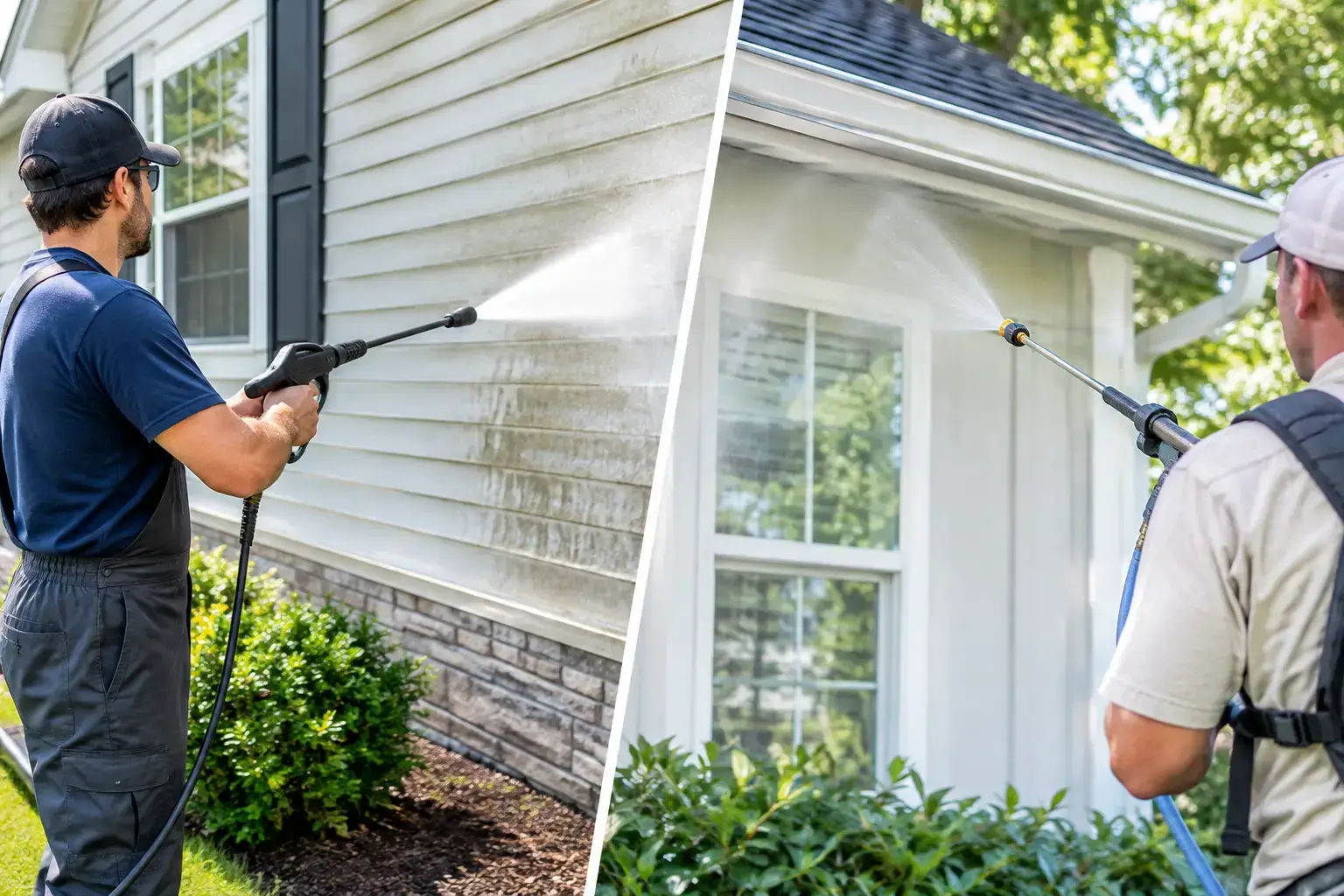
Auckland’s rain, humidity and leafy streets can turn a clean exterior green faster than most property owners expect. When comparing pressure washing versus soft washing, the right choice is not about which method is stronger. It is about using the safest method that removes grime, treats organic growth and protects the surface underneath.
A concrete path with years of built-up dirt needs a very different approach from painted weatherboards, a tile roof or a timber deck. Choosing poorly can leave behind streaks, strip paint, force water into gaps or damage delicate materials. Choosing well brings back that fresh, cared-for look without creating an expensive repair job.
What is the difference between pressure washing and soft washing?
Pressure washing uses a powerful stream of water to physically lift away surface dirt, mud, loose paint, moss and grime. The pressure can be adjusted, but it is still a forceful cleaning method. It works best on tough, durable surfaces that can handle direct water pressure.
Soft washing uses low-pressure water combined with a suitable cleaning solution. Rather than blasting contaminants away, the solution breaks down dirt and treats mould, algae, lichen and mildew at the source. After an appropriate dwell time, the surface is gently rinsed clean.
The visible result can look similar on day one, but the process and long-term outcome may be very different. High pressure can remove the top layer of green growth while leaving spores behind. Soft washing is designed to treat that biological growth, which can help surfaces stay cleaner for longer when it is the right method for the job.
When pressure washing is the better choice
Pressure washing earns its place on hard exterior surfaces where compacted grime needs more than a cleaning solution and gentle rinse. It is particularly effective for concrete driveways, footpaths, paved areas, some retaining walls and sturdy brickwork.
Driveways, paths and hard paving
Vehicle marks, muddy footprints, tyre residue and embedded dirt can make a driveway look tired even when the rest of the property is well maintained. Pressure washing can cut through this build-up and improve grip underfoot by removing slippery surface algae.
Care still matters. A trained operator adjusts the pressure, nozzle and distance to suit the condition of the concrete or pavers. Too much force can etch concrete, disturb jointing sand between pavers or leave obvious cleaning lines. Old or cracked surfaces need a more cautious approach, as pressure will not fix existing damage and may expose weak spots.
Brick, block and durable masonry
Some masonry surfaces can tolerate controlled pressure washing well, especially where dirt is trapped in textured finishes. The key word is controlled. Mortar that is loose, aged or already crumbling should not be aggressively washed. Water can be driven into gaps, and damaged pointing may need repair before cleaning begins.
Commercial outdoor areas
For business entrances, loading areas and pedestrian paths, pressure washing can improve presentation and reduce slippery grime. Scheduling is just as important as method. Cleaning should be planned around customer access, drying time and safe management of runoff, especially in high-traffic areas.
When soft washing is the safer option
Soft washing is the preferred approach for many exterior surfaces around Auckland homes because it cleans without relying on force. It is especially useful where paint, coatings, seals, delicate materials or hard-to-reach areas are involved.
House washing and painted cladding
Painted weatherboards, rendered walls, vinyl cladding and many modern exterior finishes can be damaged by excessive pressure. Water may be pushed behind boards, under flashing or into vents, while a too-close spray can mark paint and create patchy results.
Soft washing gently removes road film, spider webs, pollen, mould and algae from exterior walls. It restores a brighter finish while helping preserve the paintwork that protects your home. Before any wash, fragile areas such as loose paint, cracked seals or damaged cladding should be identified rather than treated as a cleaning problem.
Roof cleaning
Roofs require particular care. High-pressure cleaning can dislodge protective coatings, damage tiles, disturb pointing or force water where it does not belong. On metal roofing, it can also affect paint systems if the wrong pressure or technique is used.
A soft-wash treatment is generally more appropriate for moss, mould and lichen on roofs. The solution treats the growth instead of trying to strip it away with force. Roof work also carries serious height and access risks, so it is not a job for an untrained DIY attempt with a hired machine.
Timber decks, fences and outdoor furniture
Timber can look tough, but high pressure can roughen the grain, leave gouges and raise fibres that make a deck unpleasant under bare feet. Soft washing or very carefully controlled low-pressure cleaning is usually a safer starting point. If a deck is badly weathered, cleaning may need to be followed by sanding, staining or sealing once it has fully dried.
Windows, screens and delicate details
Window seals, flyscreens, exterior light fittings and decorative trim are easily damaged by forceful water. Soft washing offers a more measured clean around these details. It is still essential to use the right products and protect nearby plants, outdoor power points and areas where cleaning solution could collect.
Pressure washing versus soft washing: surface-by-surface choices
There is no one method for an entire property. A well-planned exterior clean may use both approaches on the same visit. Soft washing can refresh the house exterior and roof, while pressure washing tackles the driveway, paths and hard landscaping.
As a practical rule, choose pressure washing for sound concrete, hard paving and durable masonry with embedded dirt. Choose soft washing for roofs, painted surfaces, cladding, timber and areas affected by mould or algae. For surfaces such as natural stone, old pavers, exposed aggregate, composite decking and coated concrete, the right method depends on the material, condition and previous treatments.
If you are unsure, start with the gentler option. It is easier to increase cleaning strength where appropriate than to reverse etched concrete, stripped paint or water damage.
Why Auckland conditions change the cleaning plan
Auckland properties often deal with damp shade, salt air in coastal suburbs, heavy rain and dense vegetation. These conditions encourage moss, algae and mould, particularly on south-facing walls, shaded driveways, roof valleys and fences near trees.
That means exterior cleaning is not simply cosmetic. Slippery growth on a path can become a safety issue. Mould on cladding can make a property look neglected, while blocked gutters can cause water to overflow where it should not. Regular maintenance also makes each clean more straightforward because grime has less time to become deeply established.
For rental properties, this matters at inspection time and between tenancies. For commercial sites, it supports a cleaner first impression for staff, customers and visitors. Homeowners often find that pairing house washing with gutter cleaning, window cleaning or driveway care is a practical way to keep the whole exterior looking consistently cared for.
The risks of doing it yourself
A domestic pressure washer can be useful for a small, sturdy concrete area, but it is easier than it looks to cause damage. The most common issues are etched lines in concrete, stripped paint, scarred timber, broken seals and water forced behind cladding. Ladders, wet surfaces and roof access add another layer of risk.
Cleaning products also need careful handling. A product that works on mould may not suit every material, and runoff should be managed responsibly around gardens, drains and waterways. Eco-conscious cleaning is not just about selecting biodegradable products. It also means using the correct amount, containing runoff where required and avoiding unnecessary repeat work caused by damage.
A professional assessment should consider the surface material, age, existing coating, level of contamination, drainage and surrounding landscaping before the equipment comes out. This is particularly valuable for older homes, painted roofs, multi-level buildings and properties with delicate planting.
How to get a result that lasts
The best exterior clean starts with the cause of the grime, not just the visible mess. Trim back vegetation that keeps walls damp, clear gutters so water flows correctly, repair leaks and improve drainage around paths where practical. On frequently shaded surfaces, regular preventative cleaning is often gentler and more cost-effective than waiting for heavy growth to take hold.
Ask your cleaning provider what method they recommend for each area and why. A clear answer should cover the surface condition, the cleaning solution, how nearby plants and fittings will be protected, and any repairs that should happen first. Transparent advice is a good sign that the service is designed for your property rather than a one-size-fits-all wash.
At EcoSparks, the aim is simple: use the right exterior cleaning method for the surface, protect your property and leave every corner looking ready to sparkle. A careful clean today can make the next rainy Auckland season far easier to manage.